Transcription:
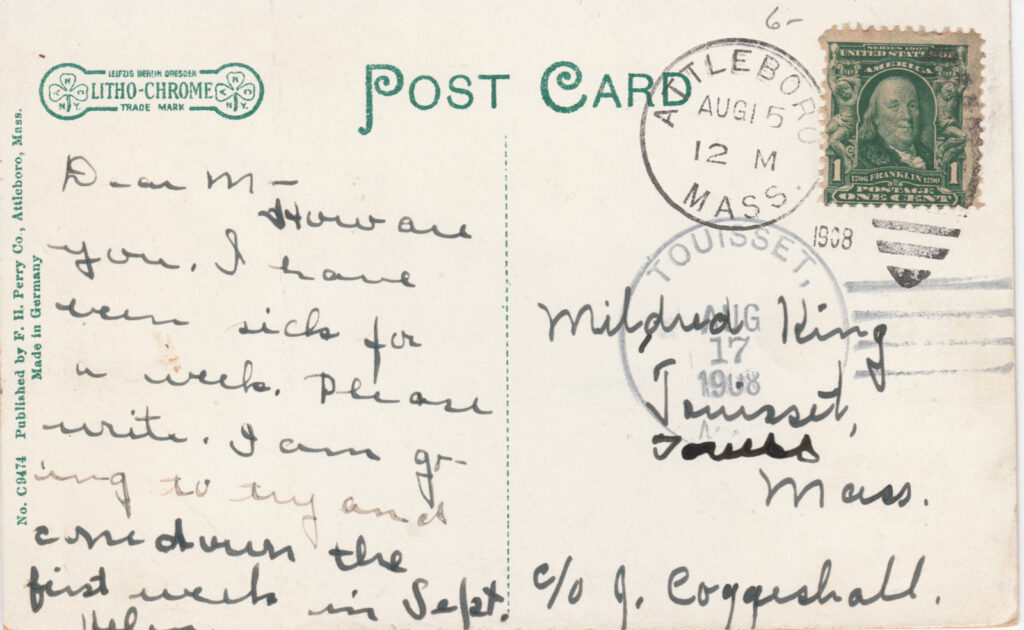
Mildred King
Touisset,
Mass.
c/o J. Coggeshall
—
Dear M,
How are you, I have been sick for a week. Please write, I am going to try and come down the first week in Sept.
Postmarked:
August 15, 1908
1908 1c Benjamin Franklin, green, perforated, type I
History and Notes:
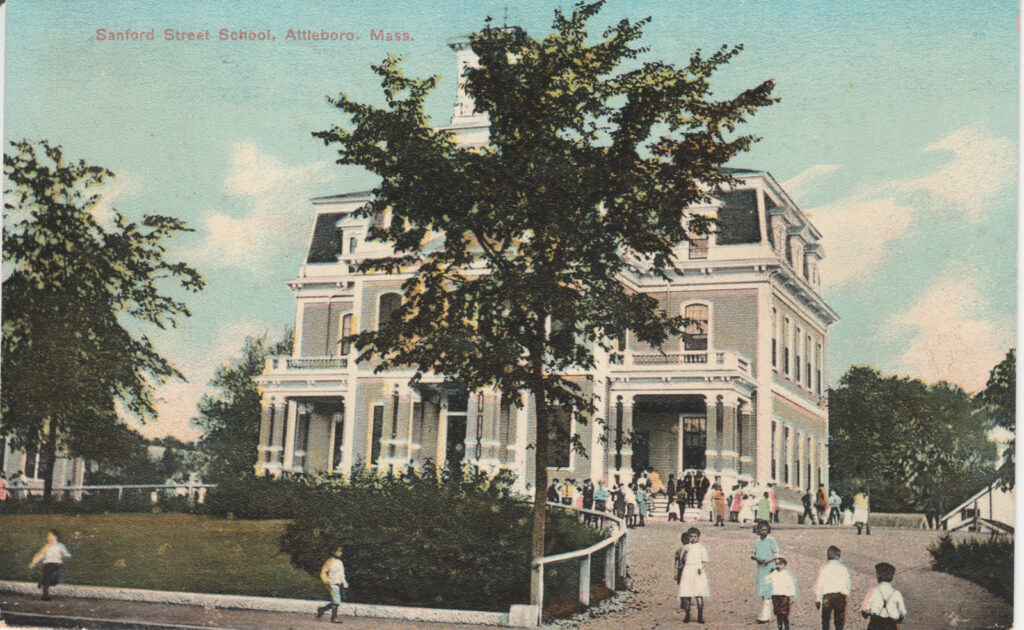
Context: Main Image: The postcard features a color-tinted photograph of Sanford Street School in Attleboro, Massachusetts, from the early 20th century.
Details:
Architecture:
- The central building is a large, ornate structure with a mansard roof, multiple dormer windows, and a central cupola, indicative of the Second Empire architectural style.
- The building has a grand entrance with a set of steps leading up to it, flanked by columns and a detailed balcony above.
- The facade is constructed from red brick with white stone accents, giving it a stately and formal appearance.
- The ornate details, such as the columns, cornices, and window trims, reflect the architectural trends of the late 19th and early 20th centuries.
Setting:
- The school is set on a spacious, well-maintained lawn with mature trees and shrubbery, creating a picturesque and welcoming environment.
- A large group of children, dressed in period attire, is gathered in the foreground, walking and playing around the school grounds, adding a lively and social atmosphere to the image.
- The sky is color-tinted in light blue with a few clouds, suggesting a pleasant day, enhancing the overall aesthetic of the postcard.
- The surroundings include a pathway leading up to the school, emphasizing the formal and grand approach to the building.
Text:
- The postcard includes the text “Sanford Street School, Attleboro, Mass.” at the top, identifying the location and providing context for the image.
Interpretation:
Historical Context:
- This postcard likely dates from the early 1900s, capturing the architectural and educational landscape of Sanford Street School during this period. The use of color-tinting enhances the visual appeal and provides a vibrant depiction of the scene.
- The buildings reflect the architectural styles popular in the late 19th and early 20th centuries, showcasing a mix of Second Empire and Victorian influences.
Architectural Significance:
- The Second Empire style of the main building, with its mansard roof and elaborate detailing, highlights the architectural diversity and grandeur often associated with important public and educational buildings of this era.
- The use of red brick and white stone accents emphasizes the formal and stately nature of the school, while the ornate details on the cupola and entrance add to its elegance.
Cultural Importance:
- The postcard captures a historical moment, illustrating the community’s pride in their educational facilities and the importance placed on providing substantial and attractive environments for learning.
- The presence of children and the well-maintained grounds symbolize the societal value placed on education and the role of schools as central institutions within the community.
- The lively scene with children playing and walking around the school grounds reflects the social and community aspect of education during this time.
Additional Details: [1908 1c Benjamin Franklin, green, perforated, type I]
Share This Article