Transcription:
Postmarked:
History and Notes:
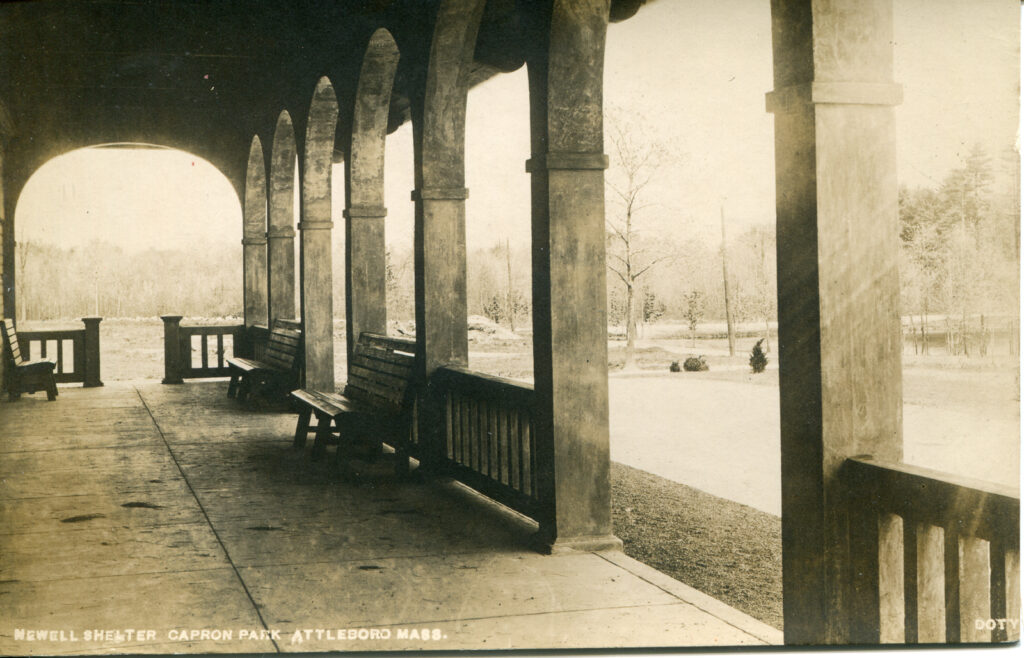
Context: Main Image: The postcard features a sepia-toned photograph of the Newell Shelter in Capron Park, Attleboro, Massachusetts, from the early 20th century.
Details:
Architecture:
- The shelter is an open-air structure with a series of arches along one side, providing a shaded seating area for park visitors.
- The arches are supported by sturdy columns, creating a repetitive pattern that adds depth and a sense of rhythm to the design.
- Wooden benches are placed along the interior of the shelter, inviting people to sit and relax while enjoying the park’s scenery.
- The flooring appears to be made of concrete, ensuring durability and ease of maintenance.
- The roof, partially visible, provides ample coverage and is likely designed to protect visitors from rain and harsh sunlight.
Setting:
- The shelter is set in a scenic area of Capron Park, with a view of open fields and trees in the background.
- The landscape includes a mix of young and mature trees, indicating a well-maintained and thoughtfully designed park environment.
- The overall atmosphere is serene and inviting, making it an ideal spot for leisurely activities and social gatherings.
Text:
- The postcard includes the text “Newell Shelter, Capron Park, Attleboro, Mass.” at the bottom, providing context and identifying the location.
Interpretation:
Historical Context:
- This postcard likely dates from the early 1900s, a period when public parks and recreational facilities were being developed to enhance urban living.
- The use of sepia tone adds a nostalgic quality to the image, emphasizing its historical significance.
Architectural Significance:
- The open design of the shelter reflects a common architectural approach for park structures of that era, focusing on functionality and aesthetic appeal.
- The combination of arches and columns gives the shelter a classical feel, while the use of concrete and wood ensures practicality and longevity.
Cultural Importance:
- The Newell Shelter represents a community space designed for relaxation and social interaction, highlighting the importance of public parks in fostering community spirit.
- The presence of seating areas within the shelter suggests it was a popular spot for gatherings, picnics, and quiet reflection.
- The well-maintained park setting reflects the community’s investment in creating and preserving green spaces for public enjoyment.
Additional Details:
Tags:
Share This Article