Transcription:
Take your last look at park street on a level.
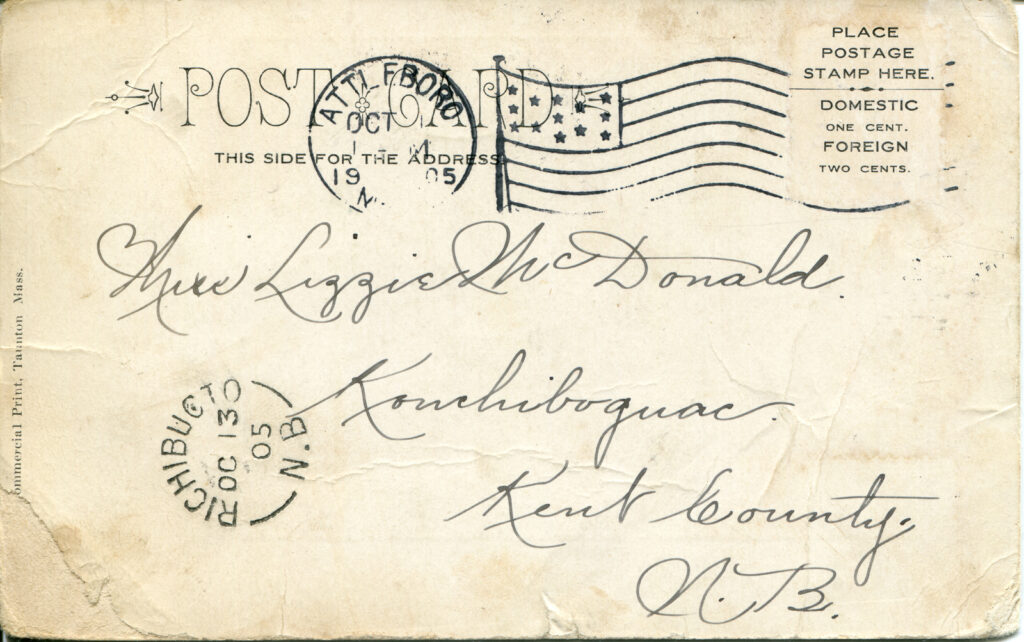
Mrs. Lizzie McDonald
Kouchibouguac
Kent County
N.B. (New Brunswick)
Postmarked:
October 1, 1905
History and Notes:
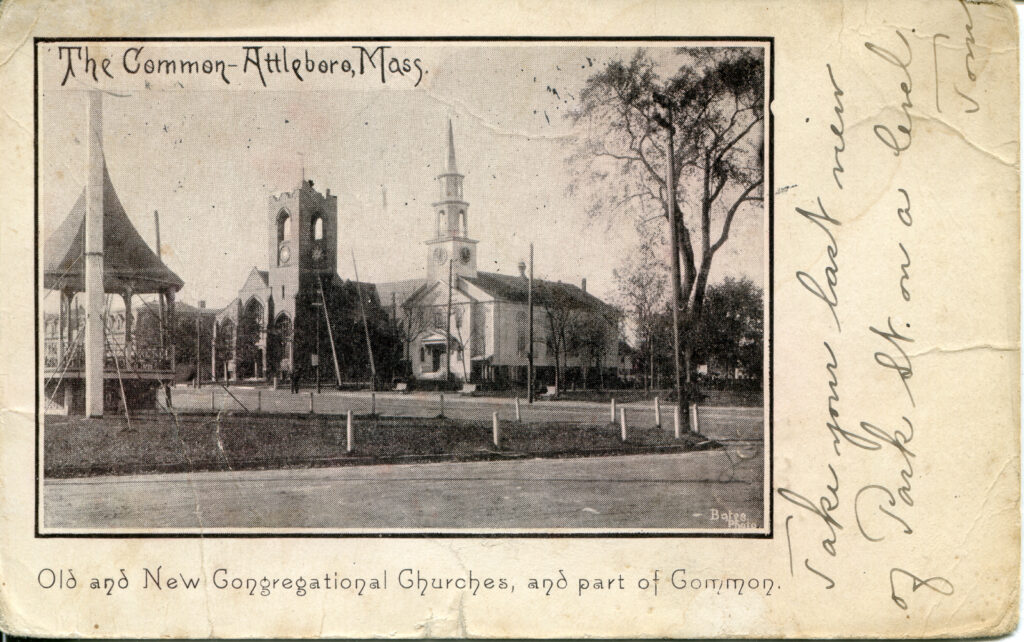
Context: Main Image: The postcard features a black-and-white photograph of The Common in Attleboro, Massachusetts.
Visual Details:
- Buildings:
- The image prominently displays two Congregational churches, identified as the old and new Congregational Churches.
- The old church is characterized by its distinct clock tower and gothic architectural elements.
- The new church has a more classic colonial style with a tall steeple and a clock.
- Bandstand:
- A bandstand or gazebo is visible on the left side of the postcard, a typical feature of town commons used for public gatherings and events.
- Trees and Poles:
- Several large trees and utility poles line the streets and common area, indicating the postcard’s period when such infrastructure was common.
- Grounds:
- The common area appears well-maintained with visible walkways and grassy areas, and some fenced sections, indicating a communal space for the town’s residents.
Text:
- Top:
- “The Common, Attleboro, Mass.” is inscribed at the top of the postcard in a stylized font.
- Bottom:
- The caption “Old and New Congregational Churches, and part of Common” provides context to the image, indicating the significance of the buildings depicted.
- Right Side:
- A handwritten note in cursive reads, “Take your last view of Park St. on a level. Song.” This personal touch suggests the postcard may have been sent to a friend or family member, highlighting the changes or memories associated with Park Street.
Interpretation:
- Function of the Postcard: This postcard captures a historical view of The Common in Attleboro, showcasing important religious buildings and a communal space that likely served as a central point for the town’s social and religious activities.
Atmosphere: The image conveys a sense of historical charm and community, reflecting a time when such commons were central to town life.
Share This Article