Transcription:
Postmarked:
History and Notes:
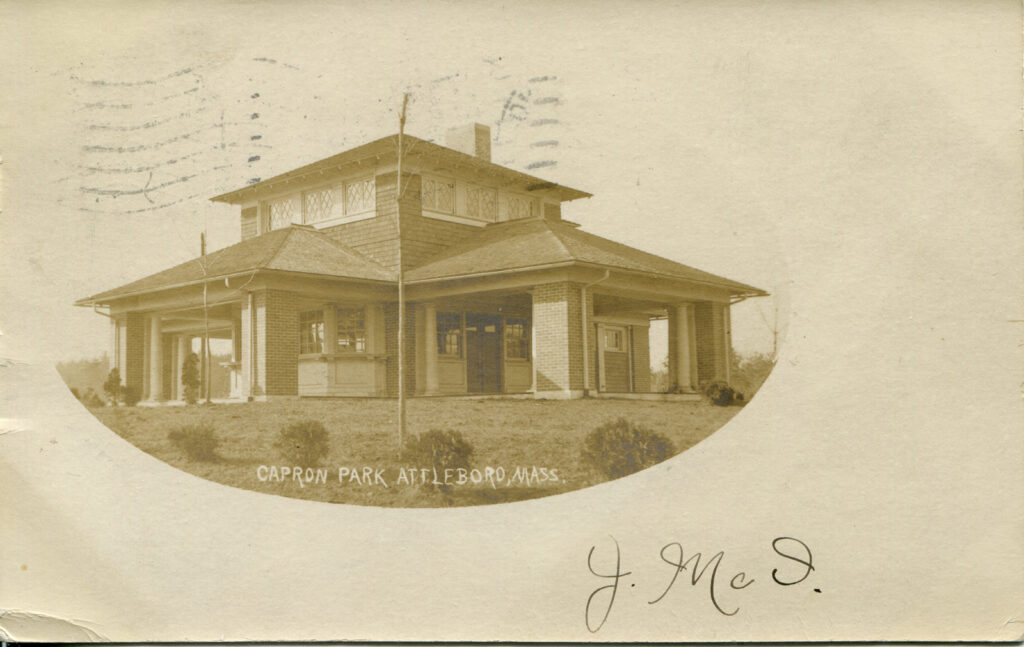
Context: Main Image: The postcard presents a sepia-toned image of a pavilion in Capron Park, Attleboro, Massachusetts. This specific structure appears to be a significant feature within the park, highlighting the architectural style and park layout of the era.
Details:
Pavilion and Surrounding Area:
- The pavilion is designed with a wide, overhanging roof supported by columns, providing ample shaded space underneath.
- The building features a combination of brick and wooden elements, reflecting early 20th-century park architecture.
- The roof has a slightly pitched design, with decorative diamond-patterned windows on the upper level.
- Small shrubs and saplings surround the pavilion, indicating a well-maintained park area.
Background:
- The background shows a faint outline of trees and open space, creating a serene and inviting atmosphere.
- The sepia tone adds a vintage feel to the image, enhancing its historical significance.
Text:
- The text on the postcard reads “CAPRON PARK, ATTLEBORO, MASS.” at the bottom, clearly identifying the location.
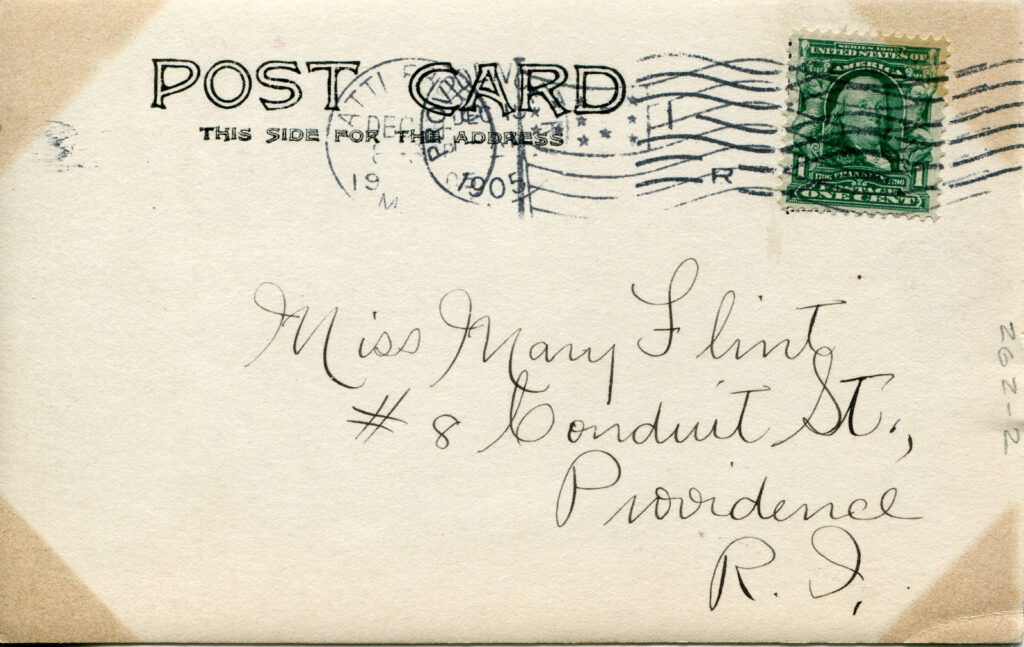
- There are postal marks at the top, indicating that the postcard was likely used and mailed at some point.
- The initials “J. McD.” are written in cursive at the bottom right corner, possibly indicating the sender or an initial greeting.
Condition:
- The postcard shows some signs of wear and age, with slight creases and faded areas typical of vintage postcards.
- The overall image and text remain clear and legible.
Interpretation:
Historical Context:
- This postcard likely dates back to the early 20th century, reflecting the design and recreational facilities available in Capron Park at that time.
- Public pavilions like this one were common features in parks, offering a place for visitors to rest and enjoy the surroundings.
Cultural Importance:
- Capron Park has been a central recreational area for Attleboro residents, and structures like this pavilion played a key role in the community’s social life.
- The postcard serves as a historical record of the park’s development and the community’s use of public spaces.
Artistic Elements:
- The sepia tone gives the postcard a nostalgic and timeless quality.
- The balanced composition and detailed architectural elements highlight the craftsmanship and design considerations of the period.
Natural Beauty:
- The pavilion is set within a carefully landscaped area, with shrubs and young trees enhancing the park’s natural beauty.
- The image captures the tranquility and charm of Capron Park, inviting viewers to imagine themselves in this peaceful setting.
Additional Details: [1908 1c Benjamin Franklin, green, perforated, type I]
Share This Article