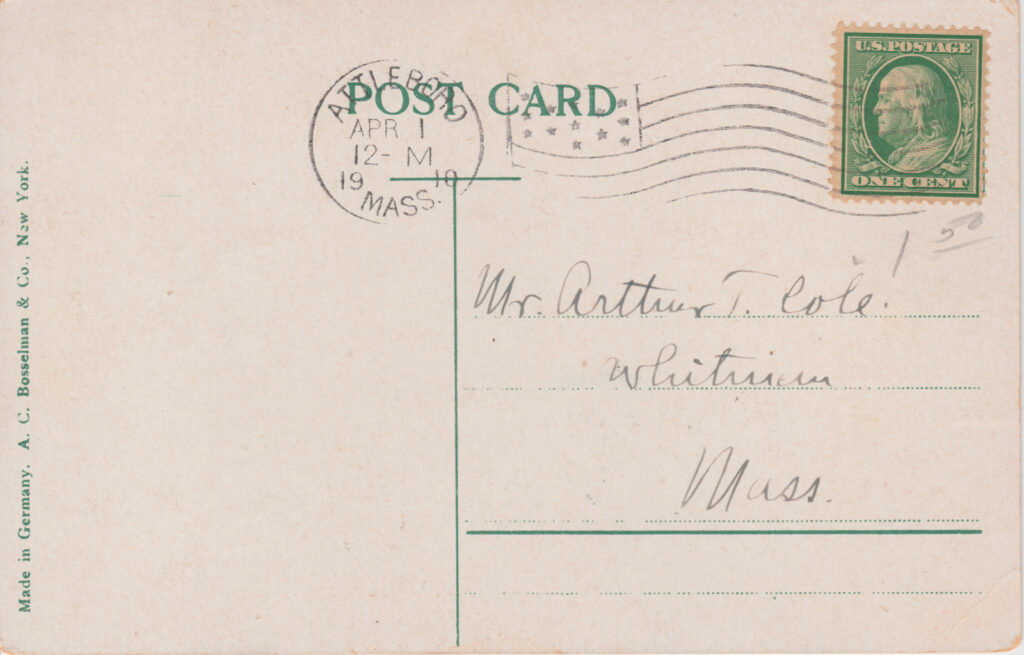
Transcription:
Mr. Arthur J. Cole
Whitinsville, Mass.
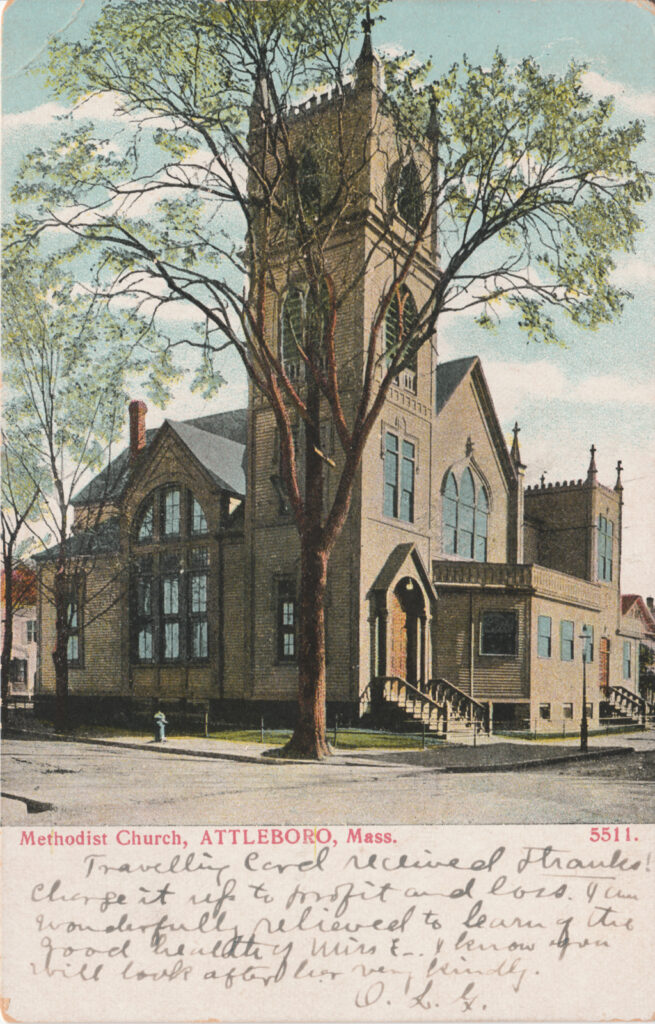
Travelling Card received thanks! Charge it up to profit and loss. I am wonderfully relieved to learn of the good health of Miss E. I know you will look after her kindly.
O. L. L.
Postmarked:
April 1, 1910
History and Notes:
Context: Main Image: The postcard showcases a color illustration of the Methodist Church in Attleboro, Massachusetts.
Details:
- Architecture:
- The church features a mix of Gothic Revival architectural elements.
- The central tower is prominent with battlements and arched windows.
- The structure is built from stone, giving it a robust and historic appearance.
- Large, pointed arch windows are evident on the main facade and side, typical of Gothic architecture.
- The entrance is marked by an arched doorway, with steps leading up to it.
- Setting:
- The church is situated on a corner lot with trees and residential buildings visible in the background.
- The surrounding area is well-maintained, suggesting an active community presence.
- The postcard captures the church in a serene, daytime setting, with clear skies and lush greenery.
- Text:
- The top of the postcard reads “Methodist Church, ATTLEBORO, Mass.” in clear, uppercase letters.
- The number “5511.” is printed on the upper right corner, likely indicating the postcard’s series number.
- A handwritten message is present at the bottom of the postcard, adding a personal touch:
- “Travellin cord received thanks! Charge it up to profit and loss. I am wonderfully relieved to learn of the good health of Miss E. I know you will look after her kindly. O. L. L.”
Interpretation:
- Architectural Significance: The postcard highlights the Gothic Revival style, emphasizing the church’s architectural beauty and historical significance.
- Cultural Importance: The depiction of the Methodist Church underscores its role as a significant religious and community landmark in Attleboro.
- Historical Context: Postcards like this were commonly used to showcase important local landmarks, serving as both souvenirs and a means to promote the architectural heritage of the community.
Additional Details:
Share This Article